Sasquatch.ca · Institute for Sasquatch Optical Studies · Since 1967, Approximately
Canada’s leading resource on naturally blurry forest beings

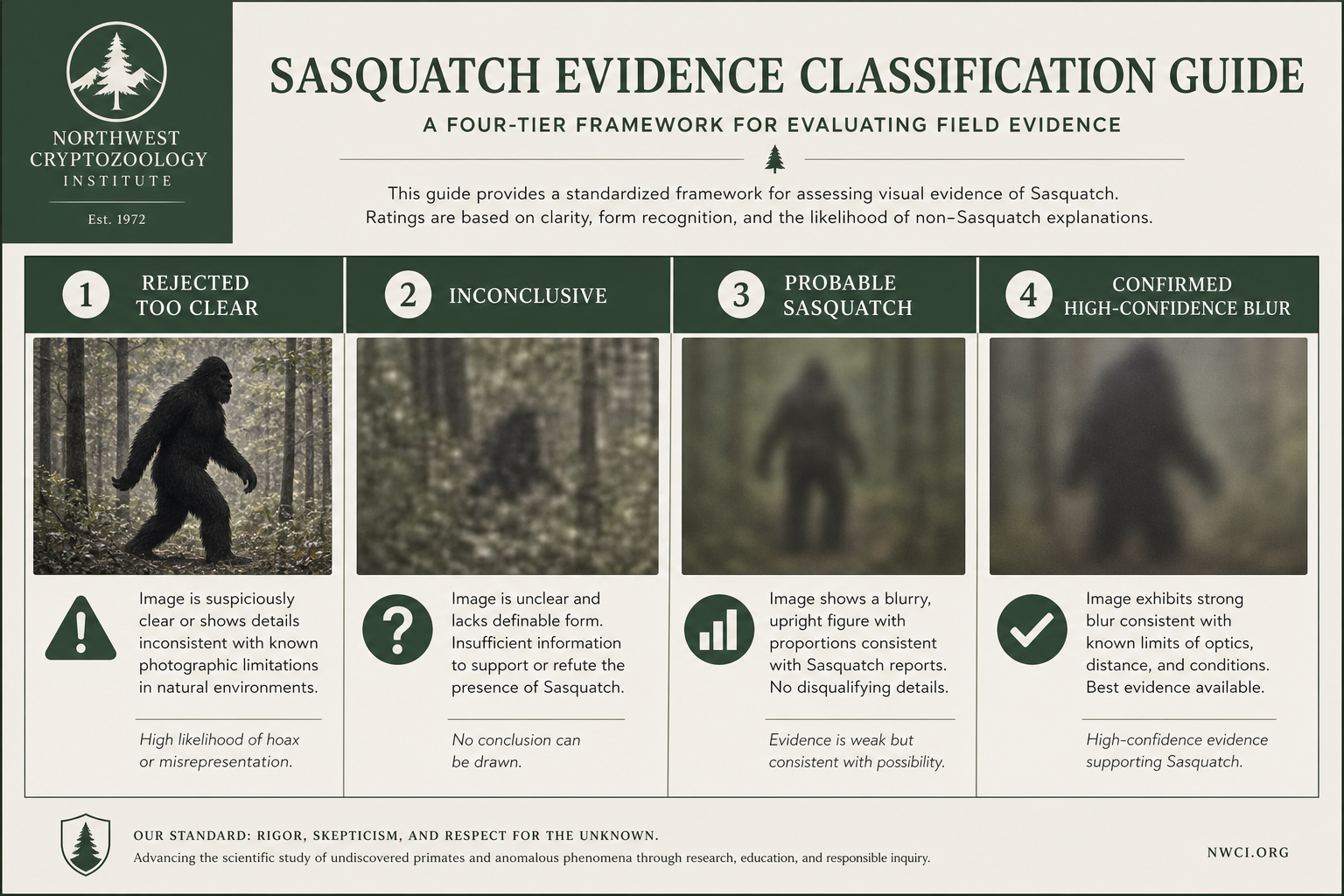
How We Classify Sasquatch Images

Clarity is not evidence. Consistency is evidence.

American Bigfoot reports and Canadian Sasquatch sightings are reviewed under the same Unified Blur Hypothesis and blur-classification framework. The Institute treats both naming traditions as describing the same large, forest-associated being with persistent resolution resistance.

Institute for Sasquatch Optical Studies blur classification chart for Sasquatch and Bigfoot sightings.
The most reliable Sasquatch image is one that refuses to become useful.

Rejected: Too Clear

Criteria: crisp edges, clearly visible face, suspiciously readable fur texture, too-convenient lighting, visible costume zipper, comfort with photography, or an image that looks like it wants to be believed.

A clear Sasquatch image contradicts the established visual profile. Clarity is not a strength. Clarity is a warning sign.
Inconclusive

Criteria: blurry, tall, near trees, witness says “I know what I saw,” could be a stump but the stump seemed alert, dog became interested but noncommittal.

Probable Sasquatch

Criteria: extremely blurry, upright, forest-adjacent, camera struggled, witness became defensive, dog reacted, no one can agree what the image shows.

Confirmed High-Confidence Blur

Criteria: large upright figure, persistent edge instability, surroundings clearer than the subject, skeptics complain the image is blurry, image matches all known Sasquatch visual traits.

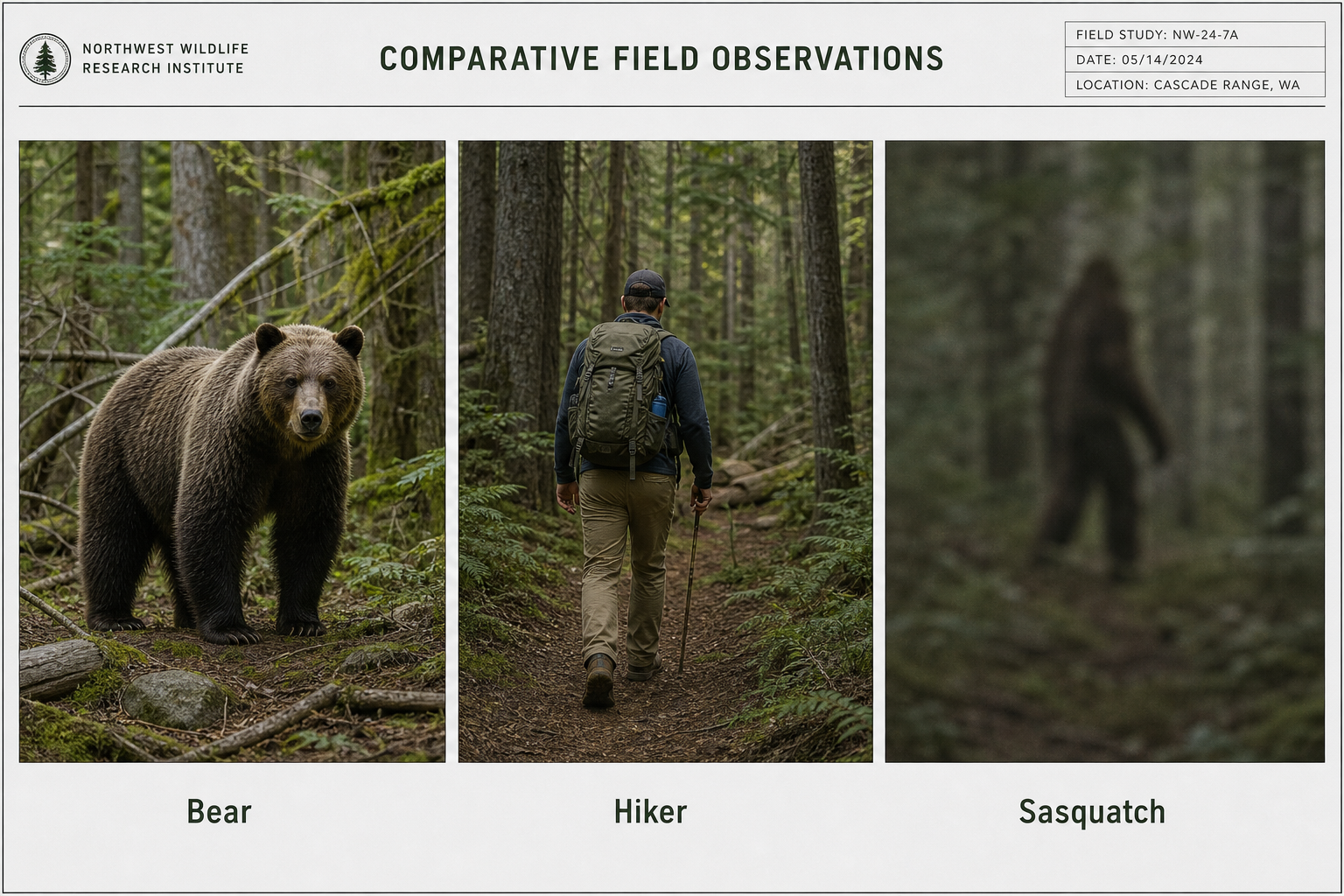
If the image is clear, it is not Bigfoot.

Scientific comparison graphic showing sharp non-Sasquatch subjects and a blurry Sasquatch or Bigfoot evidence candidate.
Only one North American forest being consistently resists focus.
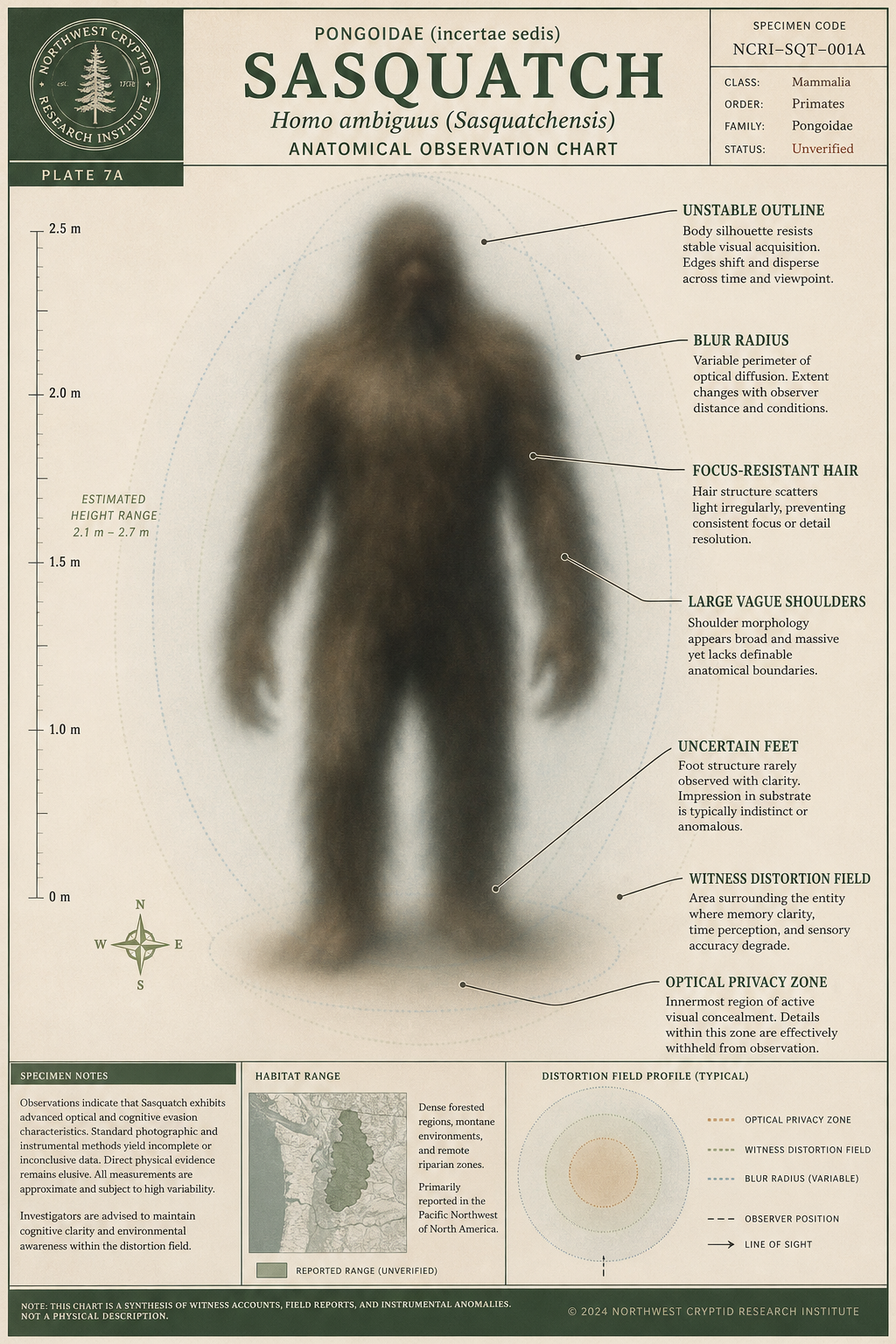
Educational anatomical diagram of a blurry Sasquatch or Bigfoot silhouette with labels for edge uncertainty and optical privacy zone.
Anatomical model of the modern Pacific Northwest Blur Ape.